
AI agents are moving from experiments to everyday business tools, and choosing the right one is now a decision for founders and operations leaders as much as for developers.
Two open-source agents are often compared: OpenClaw vs Hermes. Both are free to use, both work through the messaging apps teams already rely on, and both remember what they learn. Where they differ is emphasis.
OpenClaw is built around channel connectivity, agent routing, and extensibility, while Hermes focuses on persistent memory and a learning loop that turns recurring tasks into reusable skills. Both can support more complex workflows and delegate work, but their core approaches differ.
Which suits a business better depends on how it works, and on who looks after the agent once it is running. Let’s read on!
What the Two Agents Share
Both projects are open source under the MIT licence, so there is no licence fee. The choice of AI provider also stays with the business. Each agent can run on the model a company prefers, and the running cost comes from that model, not from the agent itself.
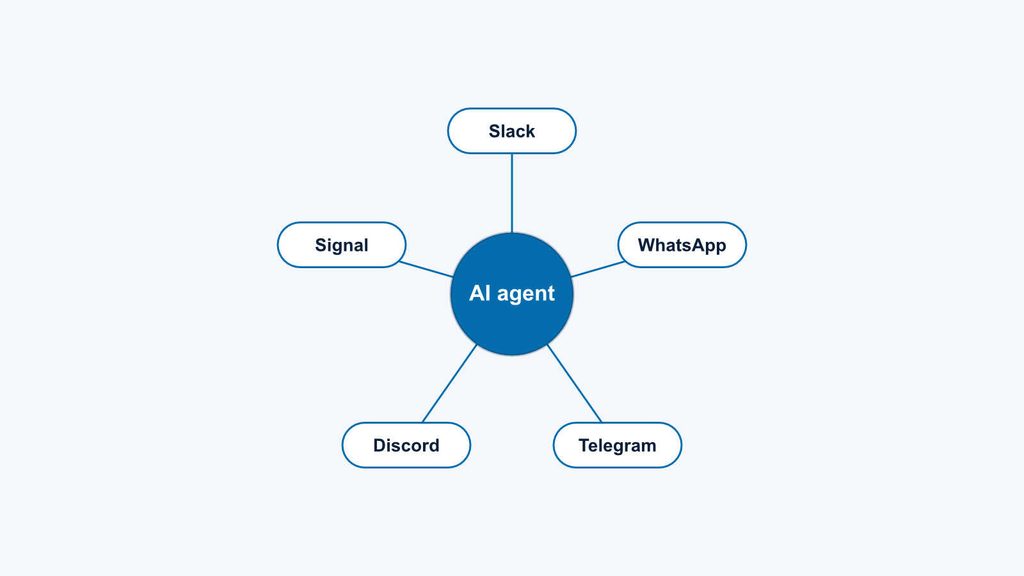
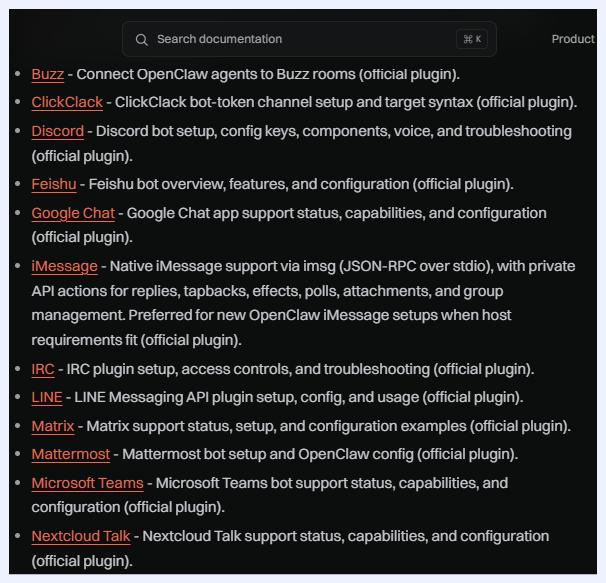
Both are built to work where people already are. OpenClaw supports more than 30 messaging channels, and Hermes supports over 27 channels including Telegram, Discord, Slack, WhatsApp, Signal, and email. A team member can message an agent much as they would a colleague.
Both also keep state. Memory and skills carry over between sessions, so an agent does not start from scratch each morning.
Also Read: Three-Quarters of UK Executives Now Consider AI Essential to Operations, PagerDuty Survey Reveals
And both leave the question of access to the person setting them up. OpenClaw can run with full system access or in a sandbox, while Hermes offers several isolated environments to run in. For a business, that choice matters, and it returns later in this article.
OpenClaw: A Hub for Channels and Teams
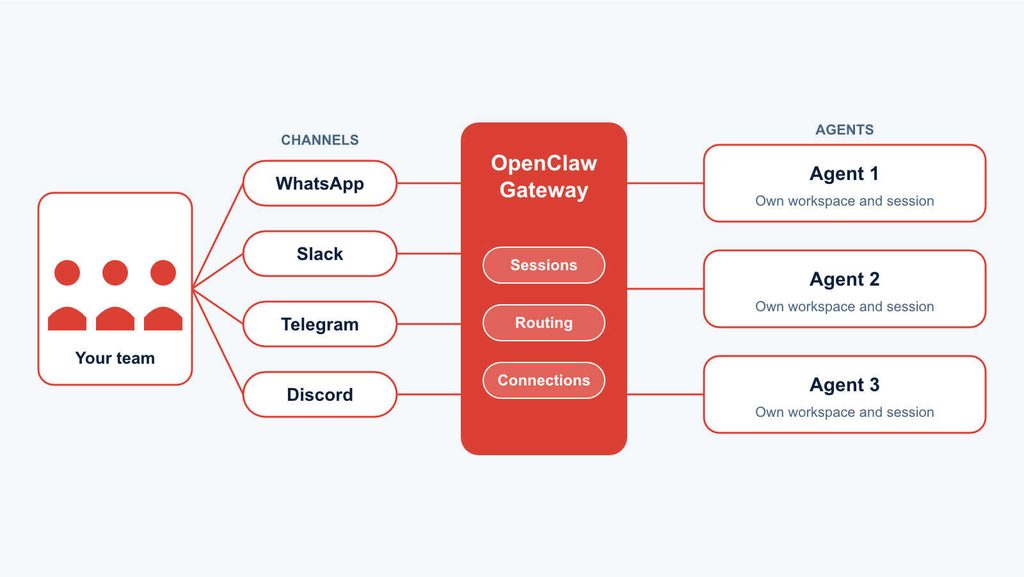
OpenClaw works as a hub. A single gateway connects an agent to the channels a business already uses, from WhatsApp and Slack to Telegram, Discord and iMessage, in direct messages and group chats alike.
That design suits teams. Several people can share one gateway, open the same sessions and steer the work together, instead of each running a private assistant. The agent can act as well as answer. It can browse the web, fill in forms, read and write files and run commands, either with full access or inside a sandbox. Skills and plugins extend what it does, and the agent can even write its own.
The project is run by an independent non-profit foundation, with no paid edition and no hosted tier. The software is free, but looking after it is the business’s job.
Hermes: An Agent That Learns on the Job
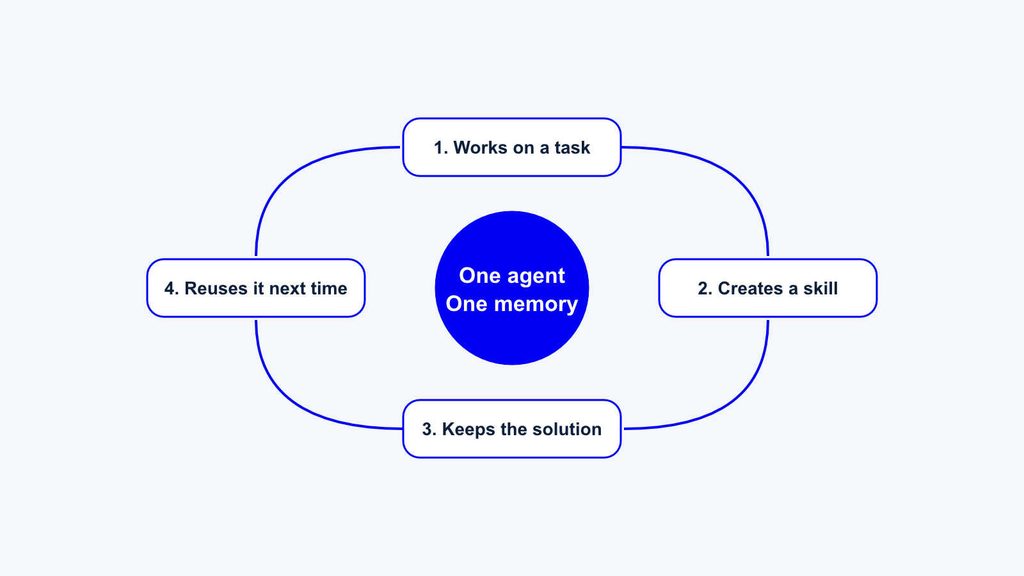
Hermes starts from a different place. Instead of a hub for many channels, it is one agent with one memory that follows a person or team across every channel they use.
Its strength is that memory builds on itself. As the agent works, it picks up projects and preferences, and generates skills from the tasks it has solved, so it does not need to be shown the same thing twice. It can also work unattended. Reports, backups and briefings can be scheduled in plain language and run in the background, and the agent can hand parts of a job to isolated subagents, each with its own conversation and terminal.
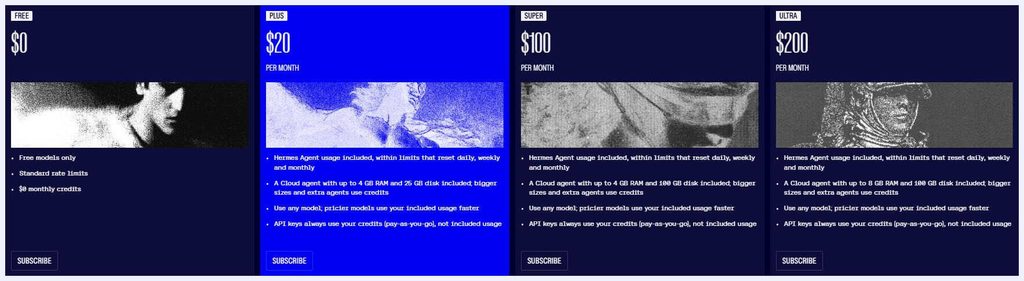
Hermes is free and open source. Nous Research, the lab behind it, offers optional paid hosting. Businesses that run the agent themselves take on its setup and upkeep.
Also Read: UK AI Firm Launches New Product GATE to Close the AI Governance Gap Facing Regulated Businesses
How the Two Compare
Side by side, the overlap is clear, and so is the difference in emphasis.
| OpenClaw | Hermes | |
| Core idea | A hub connecting channels and teams to an agent | One agent whose memory and skills grow with use |
| Channels | 29 channels, including WhatsApp, Slack, Telegram and Discord | Telegram, Discord, Slack, WhatsApp, Signal, email and more |
| Memory | Remembers preferences, projects and people | One memory across every channel |
| Skills | Community skills and plugins; can write its own | Generates skills from tasks it has solved |
| Delegation | Multi-agent routing with isolated sessions | Isolated subagents with their own conversations and terminals |
| Access control | Full access or sandboxed | Five sandbox backends, including Docker and SSH |
| Cost and hosting | Free, MIT licence; no hosted tier | Free, MIT licence; optional |
In short, OpenClaw leans towards reach: many channels, shared by a team and extended with plugins. Hermes leans towards depth: one agent that builds up memory and skills, and can hand work to subagents. Neither is better in the abstract. The right choice depends on how a business works.
Which Suits Which Business
The simplest test is to look at how the work happens.
OpenClaw tends to suit businesses where work is spread across channels and people. If a team already lives in Slack, WhatsApp or Telegram, and several people need to ask the same agent for help and see what it is doing, a shared gateway is a natural fit.
Hermes tends to suit work that repeats. If the same reports, briefings and routine tasks come round every week, an agent that remembers how it solved them last time, and can run them on a schedule, earns its keep over time.
Choosing is not a one-way door. Both are open source, and both can run on the AI provider a business prefers, so trying one on a single, well-defined task is an easy way to find out.
Whichever agent comes out on top, the same practical questions follow: where it will run, who keeps it up to date, and how much access it should have.
Launching an Agent?
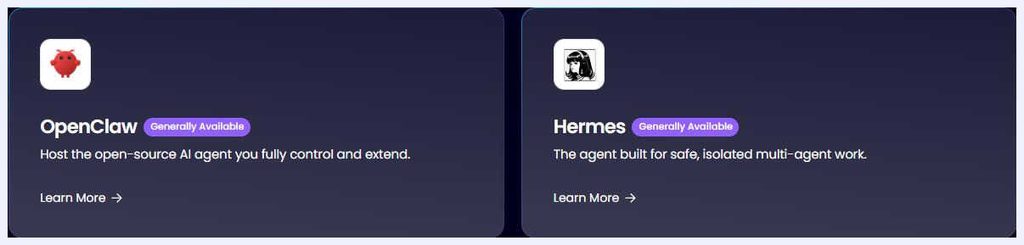
For businesses that would rather not run an agent themselves, a managed service takes the setup and upkeep off the list. Cloudways Managed AI Agents, for example, offers both OpenClaw and Hermes on isolated infrastructure and during Cloudways Black Friday and Cyber Monday promotion, you can try the agents at 80% off for two months, using the code BFCM802.
Also Read: Beyond the Data: Why Agentic AI is the Key to E-Commerce Growth
A business picks its agent, chooses a region and a size, and connects its own API key from a provider such as OpenAI, Anthropic or Google. It can also connect via your existing OpenAI subscription through Cloudways UI.
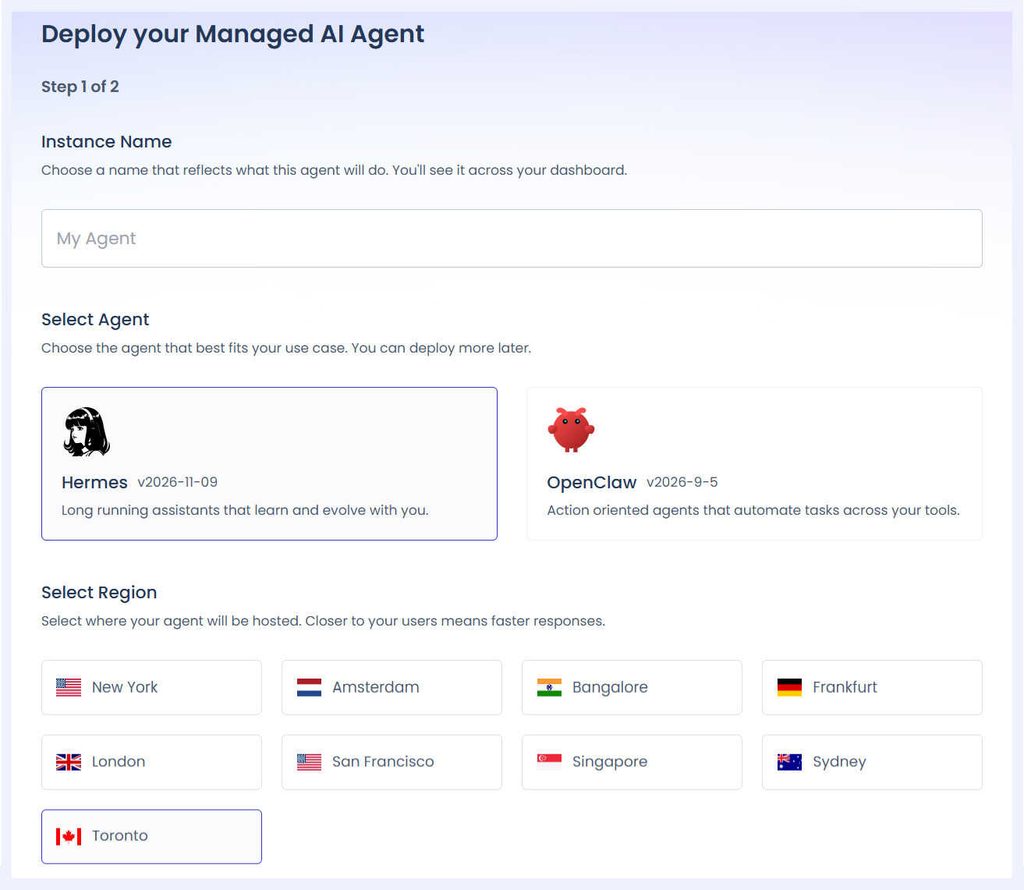
Cloudways looks after the underlying infrastructure: each agent runs on its own isolated instance, so it can reach only what you connect to it.
It tests every new OpenClaw and Hermes release before rolling it out, and if an update still breaks something, you can roll the agent back to its last working state in minutes. Daily backups and SSL run in the background, while terminal access remains for those who want deeper control.