
A record-breaking summer of heatwaves and wildfires has prompted us all to reassess how we cope with the heat, but when it comes to farming, extreme weather represents much more than cooling fans and after sun – when tough conditions make it difficult for crops to grow properly, it presents a much more significant threat to our food supply chain.
The UK’s farmers, however, remain resilient amid this uncertainty. While the government advises UK households to stockpile food, new research from Novuna Business Finance has found that almost one in two (48%) farmers are determined to work harder, innovate and continue as they are, while one in three (30%) farmers see the ‘new normal’ of extreme weather across the UK and Europe as an opportunity to adapt, learn and grow – especially when it comes to sustainable practices.
Meanwhile, only one in 10 (10%) farmers surveyed reported that they would have to scale back their business and production, with a similar number (12%) saying they would consider leaving the industry altogether.
For many farmers, the road to survival lies in sustainable farming practices, with adopting drought-resistant crop varieties top of the list of actions farmers feel would have the greatest impact, chosen by one in three respondents (33%). Investment in water storage and reservoirs was also a popular solution (29%), and government grants and financial support came in third, cited by more than one in four farmers (26%) as action they feel would help.
Also Read: The Farmer’s Guide to Using Amino Acid Fertilizers for Sustainable Agriculture
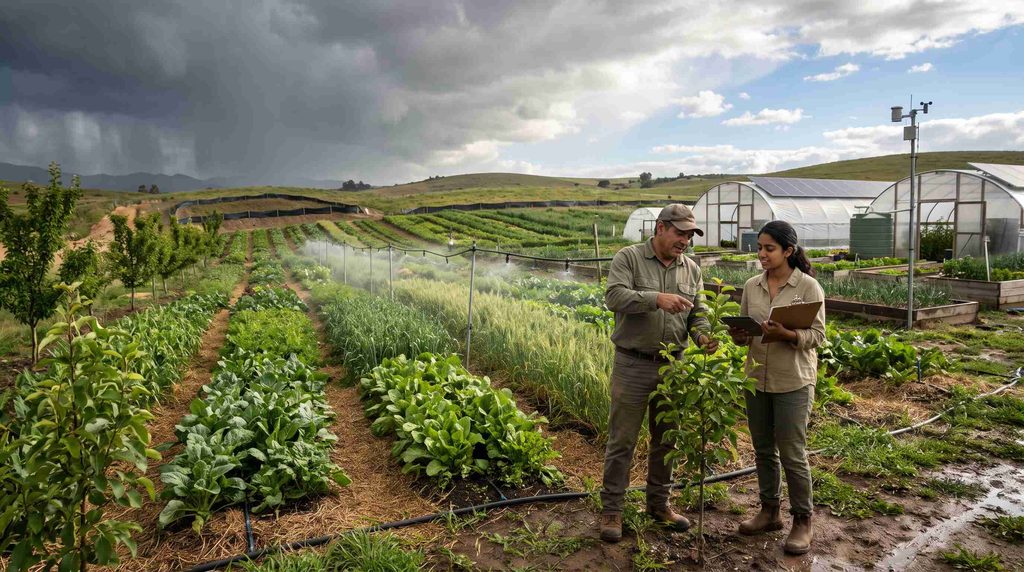
East Kent-based Ed Kyrke-Smith runs Rebel Farmer, growing produce for his local area and championing sustainable, terraforming farming practices. The sustainable farming practices he advocates for have enabled him to survive a challenging summer relatively unscathed, and now he’s keen to share the lessons he’s learned – and the practices which have proved effective for him – with both his local network and the wider farming community.

For Ed Kyrke-Smith, Founder of Rebel Farmer, building a strong community is the next step towards helping farmers thrive despite extreme weather. He said: “2026 might have been the coolest year that we’ll have from now on – things almost undoubtedly are going to become more difficult and more extreme, so food is going to become a top agenda in local and national security. I’ve ended up networking with a huge amount of people locally who are working in the ecological space, from nature enthusiasts to ecological farmers and homesteaders and Rebel Farmer has become more of a movement: we’re now part of Bioregion East Kent Community Interest Company which is a holistic effort to create that resilience that we now need. Now, I’m scaling up in quite a considerable way to try and apply what I applied to three acres of land to the whole of East Kent.”
Jo Morris, Head of Insight at Novuna Business Finance, said: “With droughts and heatwaves becoming the new summer normal, and a challenging winter ahead of us, farmers across the UK are already feeling the impact of extreme weather, as our research shows. The good news, however, is that the sector remains resilient. Many farmers are responding to these challenges with energy and confidence, with some even seeing them as an opportunity to adapt, champion sustainability and even grow.
Also Read: Revolutionizing Remote Monitoring: The Internet of Things (IoT)
“Ed’s years of existing work in sustainable farming have meant that Rebel Farmer is not only kinder to the environment, it is also more resistant to the challenge of extreme weather. The success of sustainable farms over these last few difficult summer months shows that investing in sustainability is the right direction of travel, and Novuna Business Finance is there to support businesses making these changes.”